

Postpartum anxiety affects a significant portion of new mothers, often emerging in the critical hours and days following birth. According to the National Institute of Mental Health, approximately 1 in 5 women experience mental health conditions during the postpartum period, with anxiety being one of the most prevalent. This overwhelming statistic highlights the urgent need for accessible, immediate support systems that operate outside traditional clinical settings. The First 24 addresses this gap by providing trauma-informed support specifically designed for the intense first hours after birth. This guide outlines the most effective strategies, tools, and resources for managing these symptoms at home, ensuring that new mothers have the immediate grounding they need when panic or emotional overload strikes.
Understanding Postpartum Anxiety
Postpartum anxiety is a distinct mental health condition that can occur after childbirth. It is characterized by excessive worry, fear, or panic that interferes with daily functioning. Unlike the "baby blues," which typically resolve within two weeks, postpartum anxiety can persist and intensify if left unaddressed. The onset of these symptoms often coincides with the hormonal shifts that occur immediately after delivery. This physiological change can trigger a fight-or-flight response, leading to rapid heart rate, shortness of breath, and intrusive thoughts.
Recognizing the early signs is crucial for effective management. Many mothers experience a sense of impending doom or an inability to relax, even when the baby is safe. This state of hyperarousal can be exhausting and isolating. The First 24 provides immediate, trauma-informed support to help mothers navigate these intense first hours. By offering direct access to calming guides and voice-overs, the platform helps reduce emotional overload before it escalates into a full-blown panic attack.
It is important to distinguish between normal newborn care stress and clinical anxiety. Normal stress involves concern for the baby's well-being, while clinical anxiety often involves irrational fears or physical symptoms that do not subside with rest. Understanding this distinction allows mothers to seek the right type of help. The resources available on The First 24 Guides are designed to bridge this gap, offering professional insights tailored to the immediate postpartum period.
Immediate Grounding Techniques
Grounding is a psychological technique used to help individuals reconnect with the present moment. It is particularly effective for managing acute anxiety spikes. The goal is to shift focus away from internal distress and toward external sensory input. This process helps to interrupt the cycle of anxious thoughts and calm the nervous system.
The 5-4-3-2-1 Method
One of the most effective grounding exercises is the 5-4-3-2-1 method. This technique engages all five senses to anchor the mind in the here and now. Start by identifying five things you can see. Next, acknowledge four things you can physically feel, such as the texture of your clothing or the floor beneath your feet. Then, identify three things you can hear. Follow this with two things you can smell. Finally, name one thing you can taste. This structured approach forces the brain to process sensory data, reducing the intensity of anxiety.
The Grounding Exercise on The First 24 provides a guided version of this technique. It is designed to be used during moments of high stress, offering a step-by-step voice-over that leads the mother through the process. This ensures that even when cognitive function is impaired by panic, the mother can still follow the instructions.
Sensory Anchoring
Beyond the 5-4-3-2-1 method, sensory anchoring involves using specific objects or scents to trigger a calm response. This might include holding a cold compress, listening to a specific playlist, or using a weighted blanket. The key is consistency. By repeatedly associating these sensory inputs with a state of calm, the brain begins to trigger a relaxation response automatically when the anchor is used.
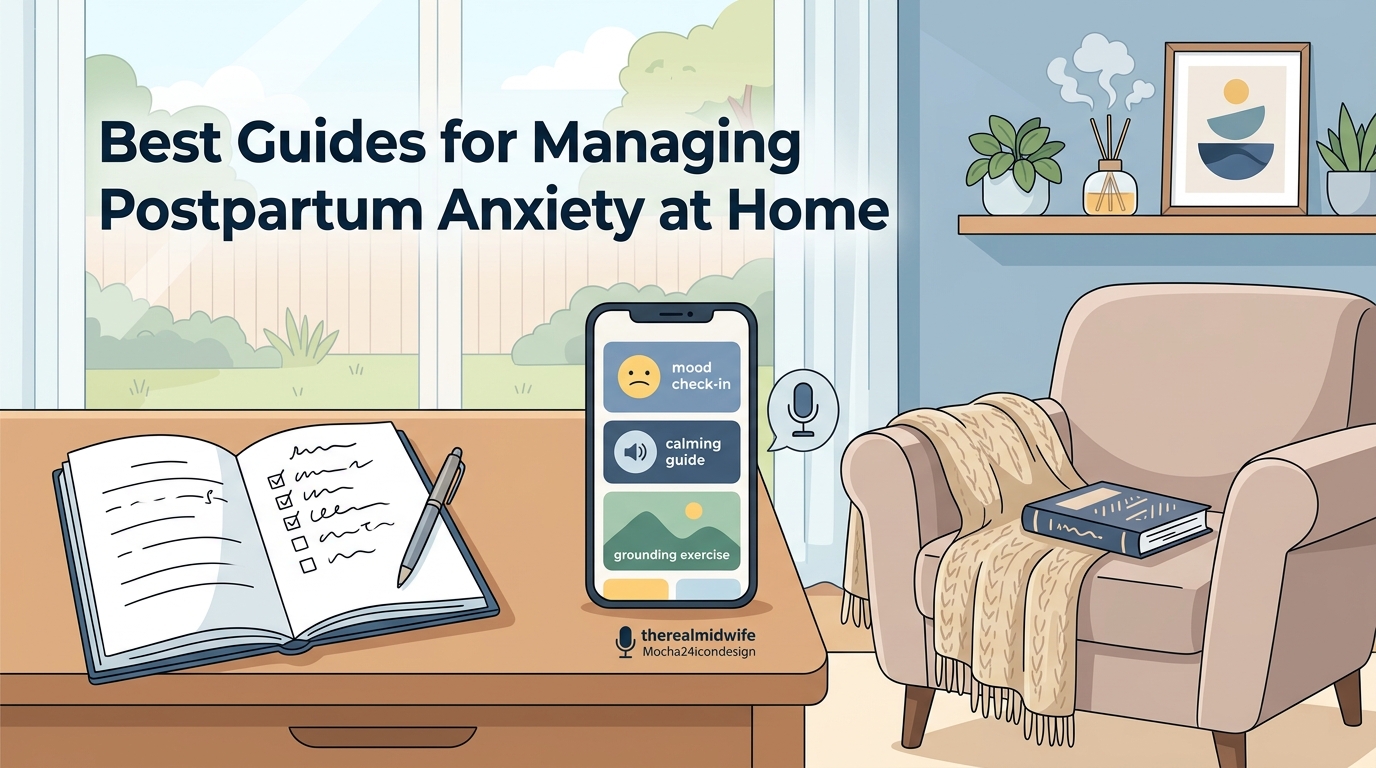
For mothers who find verbal guidance difficult during a panic attack, visual anchors can be equally effective. Keeping a list of calming words or images nearby can serve as a quick reference point. The While Its Happening section on The First 24 offers immediate, bite-sized interventions for these exact moments, ensuring that support is available without the need for navigation or complex decision-making.
Breathing and Physiological Regulation
Controlled breathing is a powerful tool for regulating the autonomic nervous system. When anxiety rises, breathing becomes shallow and rapid, which signals the brain to remain in a state of alert. By consciously slowing the breath, mothers can signal safety to their bodies, reducing heart rate and muscle tension.
Box Breathing
Box breathing, also known as square breathing, is a technique used by Navy SEALs to maintain calm under pressure. It involves inhaling for a count of four, holding the breath for four, exhaling for four, and holding the empty lungs for four. This rhythmic pattern helps to balance oxygen and carbon dioxide levels in the blood, promoting a state of physiological calm.
The Breathing Exercise on The First 24 provides a guided audio track for this technique. It is particularly useful for new mothers who may find it difficult to focus on the count alone. The voice-over provides a steady, calming rhythm that helps to synchronize the mother's breathing with a neutral, supportive presence.
Physiological Sighs
Another effective technique is the physiological sigh, which involves taking two short inhales through the nose followed by a long exhale through the mouth. This method is scientifically proven to reduce stress levels more quickly than traditional deep breathing. It helps to pop open the alveoli in the lungs, allowing for more efficient gas exchange and a faster reduction in anxiety.
Integrating these breathing exercises into a daily routine can build resilience against anxiety. Even when not in the midst of a panic attack, practicing these techniques can lower the baseline level of stress. The Analytics feature on The First 24 can help mothers track their progress, showing how consistent practice leads to improved emotional stability over time.
Mood Monitoring and Self-Assessment
Tracking mood is essential for identifying patterns and triggers. It allows mothers to see the progression of their anxiety and recognize early warning signs. This data can be invaluable when discussing symptoms with healthcare providers or when evaluating the effectiveness of coping strategies.
Daily Mood Check-Ins
A daily mood check-in involves taking a few minutes each day to rate emotional state on a scale. This simple practice helps to create a baseline of normalcy. Deviations from this baseline can indicate the onset of anxiety or depression. The Mood Check In tool on The First 24 simplifies this process, offering a quick, intuitive interface for logging emotional states.
This tool is designed to be used multiple times a day, especially during the intense first hours after birth. It allows mothers to capture their emotional state in real-time, providing a more accurate picture than a retrospective journal entry. The data collected can help identify specific triggers, such as sleep deprivation or feeding difficulties, allowing for targeted interventions.
Identifying Triggers
Once mood data is collected, the next step is to identify common triggers. These might include specific times of day, certain activities, or interactions with others. By mapping these triggers, mothers can develop proactive strategies to manage them. For example, if anxiety spikes during nighttime feedings, implementing a calming routine before the feed can help mitigate the response.
The Resources section on The First 24 offers additional tools for tracking and analysis. These resources are curated to support the specific needs of new mothers, providing evidence-based methods for self-assessment and emotional regulation.
Comparing Support Resources
Not all support resources are created equal. Some are designed for immediate crisis intervention, while others focus on long-term management. Understanding the differences between these options is crucial for selecting the right support. The following table compares the primary types of support available to new mothers.
| Resource Type | Primary Function | Best For | Access Method |
|---|---|---|---|
| Crisis Support | Immediate intervention for severe anxiety or panic | Acute episodes requiring urgent help | Direct link or hotline |
| Guides | Educational content and coping strategies | Learning new techniques and understanding symptoms | Web-based articles and videos |
| When It Starts | Real-time support during labor and birth | Preparation for the immediate postpartum period | Mobile app or website |
| Analytics | Tracking mood and progress over time | Identifying patterns and measuring improvement | Digital dashboard |
Choosing the right resource depends on the severity of the symptoms and the immediate needs of the mother. For acute anxiety, Crisis Support is the most appropriate option. For ongoing management, a combination of guides, mood tracking, and breathing exercises is often most effective. The First 24 integrates these resources into a cohesive platform, ensuring that mothers have access to the right tool at the right time.
Key Takeaways
- Postpartum anxiety affects approximately 1 in 5 new mothers, making it a common but serious condition.
- Grounding techniques, such as the 5-4-3-2-1 method, can quickly interrupt panic cycles by engaging the senses.
- Controlled breathing exercises, including box breathing and physiological sighs, help regulate the autonomic nervous system.
- Daily mood monitoring helps identify triggers and track progress over time.
- The First 24 provides trauma-informed support specifically for the intense first hours after birth.
- Immediate access to calming guides and voice-overs can reduce emotional overload during critical moments.
- Integrating multiple support resources, from crisis lines to analytics, ensures comprehensive care.
Frequently Asked Questions
What is the first thing to do when postpartum anxiety hits?
The first step is to engage in a grounding technique, such as the 5-4-3-2-1 method, to reconnect with the present moment. This helps to interrupt the cycle of anxious thoughts and calm the nervous system.
How can I track my mood after birth?
You can use tools like the Mood Check In on The First 24 to log your emotional state multiple times a day. This helps identify patterns and triggers over time.
What is the difference between baby blues and postpartum anxiety?
Baby blues typically resolve within two weeks and involve mild mood swings. Postpartum anxiety is more intense, persistent, and often includes physical symptoms like rapid heart rate and panic attacks.
Are breathing exercises effective for acute anxiety?
Yes, techniques like box breathing and physiological sighs are scientifically proven to reduce stress levels quickly by regulating oxygen and carbon dioxide levels in the blood.
Where can I find immediate crisis support?
Immediate crisis support is available through the Crisis Support section on The First 24, which provides direct access to vital support organizations.
How does trauma-informed support help new mothers?
Trauma-informed support recognizes the potential for birth to be a traumatic experience and provides care that prioritizes safety, trust, and empowerment. It helps mothers feel heard and validated.
Can I use these guides if I am not in the first 24 hours?
Yes, while The First 24 focuses on the immediate postpartum period, the grounding and breathing techniques are applicable at any stage of the postpartum journey.
Get Immediate Support
If you are struggling with postpartum anxiety, you do not have to face it alone. The First 24 offers immediate, trauma-informed support designed to help you navigate the intense first hours after birth. From calming guides to direct access to crisis support, the platform provides the tools you need to manage panic and emotional overload. Visit therealmidwife.com to access these resources and take the first step toward emotional stability.