

The first hours after birth represent a profound physiological and emotional shift. According to recent maternal health studies, approximately 10 to 20 percent of new mothers experience significant anxiety or panic during the immediate postpartum period, often triggered by sensory overload and hormonal fluctuations. This intense window requires immediate, trauma-informed support to help navigate the emotional turbulence. The following guide outlines specific grounding techniques designed to manage panic and restore calm during these critical early moments.
Understanding Postpartum Overwhelm
Postpartum overwhelm is not a sign of weakness. It is a physiological response to the sudden drop in hormones and the intense demands of newborn care. The First 24 provides immediate, trauma-informed support for new mothers navigating this intense period. Recognizing the symptoms is the first step toward regulation.
Common symptoms include rapid heartbeat, shallow breathing, and a feeling of detachment from reality. These are normal stress responses. The goal is not to eliminate the feelings but to manage them through structured intervention. Grounding is the practice of anchoring your awareness in the present moment. This technique interrupts the panic cycle and allows the nervous system to reset.
For detailed strategies on managing these feelings, visit our Guides section. These resources are curated to provide clarity when confusion sets in. Understanding the biological basis of your stress can reduce the secondary anxiety of "feeling wrong."
Controlled Breathing Exercises
Breathwork is the most accessible tool for immediate physiological regulation. When the body is in fight-or-flight mode, breath becomes shallow. Reversing this pattern signals safety to the brain.
The 4-7-8 Technique
This method is highly effective for reducing acute anxiety. Inhale through your nose for 4 seconds. Hold the breath for 7 seconds. Exhale slowly through your mouth for 8 seconds. Repeat this cycle four times. This specific ratio helps lower the heart rate rapidly.
For a guided audio version of this exercise, access our Breathing Exercise page. The voice-over support ensures you can follow the rhythm even when your hands are occupied with the baby.
Box Breathing
Box breathing is used by elite athletes and military personnel to maintain calm under pressure. Inhale for 4 counts, hold for 4, exhale for 4, and hold empty for 4. This technique stabilizes the autonomic nervous system. It is particularly useful during contractions or immediately after delivery when emotions are high.
Sensory Grounding Techniques
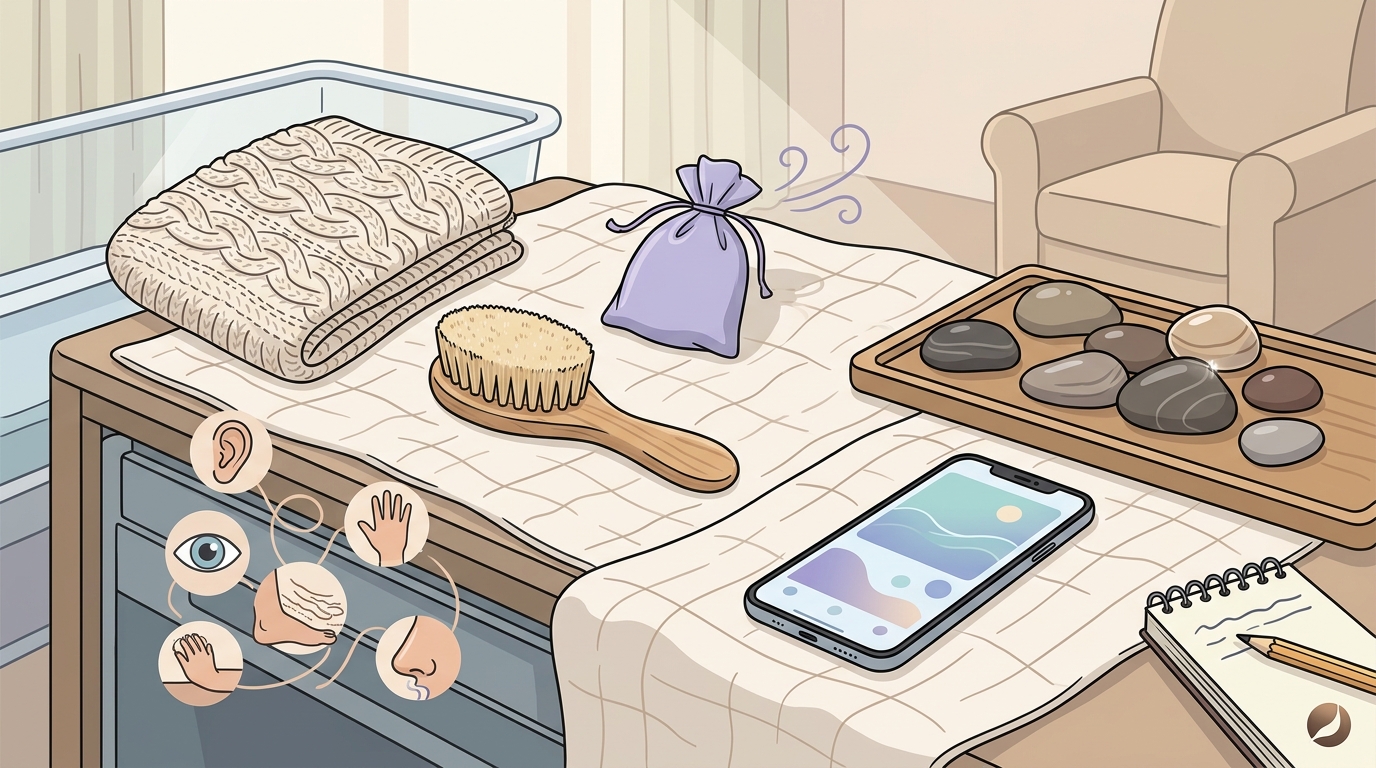
Sensory grounding redirects the brain from internal panic to external reality. This is crucial when feelings of detachment or derealization occur.
The 5-4-3-2-1 Method
This is a classic psychological tool for anxiety management. Identify five things you can see, four you can touch, three you can hear, two you can smell, and one you can taste. This forces the brain to process concrete data rather than abstract fears.
Our Grounding Exercise resource provides a printable checklist for this method. Having a physical reference can be helpful when cognitive function is impaired by stress.
Tactile Anchoring
Focus on the texture of the baby's blanket or the coolness of a water glass. Physical touch provides immediate feedback to the nervous system. Touch is a powerful regulator of emotional state. It reminds the body that it is safe and present.
Mood Check-In Protocols
Regular assessment of emotional state is vital for early intervention. Ignoring subtle signs of distress can lead to escalation. The First 24 encourages continuous monitoring of mental well-being.
Use our Mood Check In tool to log your emotional state hourly. This data helps identify patterns and triggers. It also provides a record to share with healthcare providers if symptoms persist.
Tracking mood is not about judgment. It is about awareness. By recognizing trends, you can proactively apply grounding techniques before panic sets in. This proactive approach is a cornerstone of trauma-informed care.
Accessing Crisis Support
While most postpartum stress is manageable with self-care, some situations require professional intervention. Knowing where to turn is essential for safety.
If you experience thoughts of harming yourself or the baby, seek help immediately. The Crisis Support page on The First 24 provides direct links to emergency services and specialized postpartum mental health hotlines. These resources are available 24/7.
Early intervention leads to better outcomes. Do not hesitate to reach out. Support is available and effective. Our Resources directory includes verified organizations dedicated to maternal mental health.
Key Takeaways
- Immediate Action: Use breathing exercises within the first hour of feeling overwhelmed to prevent escalation.
- Sensory Focus: The 5-4-3-2-1 method effectively interrupts panic cycles by engaging the senses.
- Continuous Monitoring: Regular mood check-ins help identify triggers and track progress over time.
- Professional Help: Crisis support is available 24/7 for severe symptoms or safety concerns.
- Trauma-Informed Care: All techniques are designed to respect the physiological reality of postpartum recovery.
- Community Support: Connecting with other mothers reduces isolation and normalizes the experience.
- Self-Compassion: Acknowledge that feeling overwhelmed is a normal part of the postpartum journey.
Frequently Asked Questions
How long should I practice grounding exercises?
Practice for 5 to 10 minutes until you feel a shift in your emotional state. Consistency is more important than duration. Short, frequent sessions are often more effective than one long session.
Can grounding exercises help with postpartum anxiety?
Yes, grounding exercises are a primary tool for managing postpartum anxiety. They help regulate the nervous system and reduce the intensity of anxious thoughts. For more information, visit our When It Starts guide.
What is the difference between grounding and meditation?
Grounding focuses on the present moment and sensory input. Meditation often involves focusing on breath or a mantra to achieve a state of relaxation. Grounding is more active and immediate.
When should I seek professional help?
Seek help if you experience persistent sadness, inability to care for yourself or the baby, or thoughts of harm. Our Crisis Support page provides immediate contact information.
Are these exercises safe for all new mothers?
Yes, these exercises are designed to be gentle and adaptable. They do not require physical exertion. However, always consult your healthcare provider if you have specific medical concerns.
How can partners help with grounding?
Partners can assist by reminding the mother to breathe, helping with the 5-4-3-2-1 exercise, or simply providing a calm presence. Their support is invaluable during this time.
Is it normal to feel overwhelmed in the first 24 hours?
Yes, it is very common. The First 24 is dedicated to supporting mothers through this intense period. You are not alone in this experience.
Get Immediate Support
If you are feeling overwhelmed right now, do not wait. Access our Home page to begin your grounding journey. Immediate support is available to help you navigate these first hours with confidence and calm.